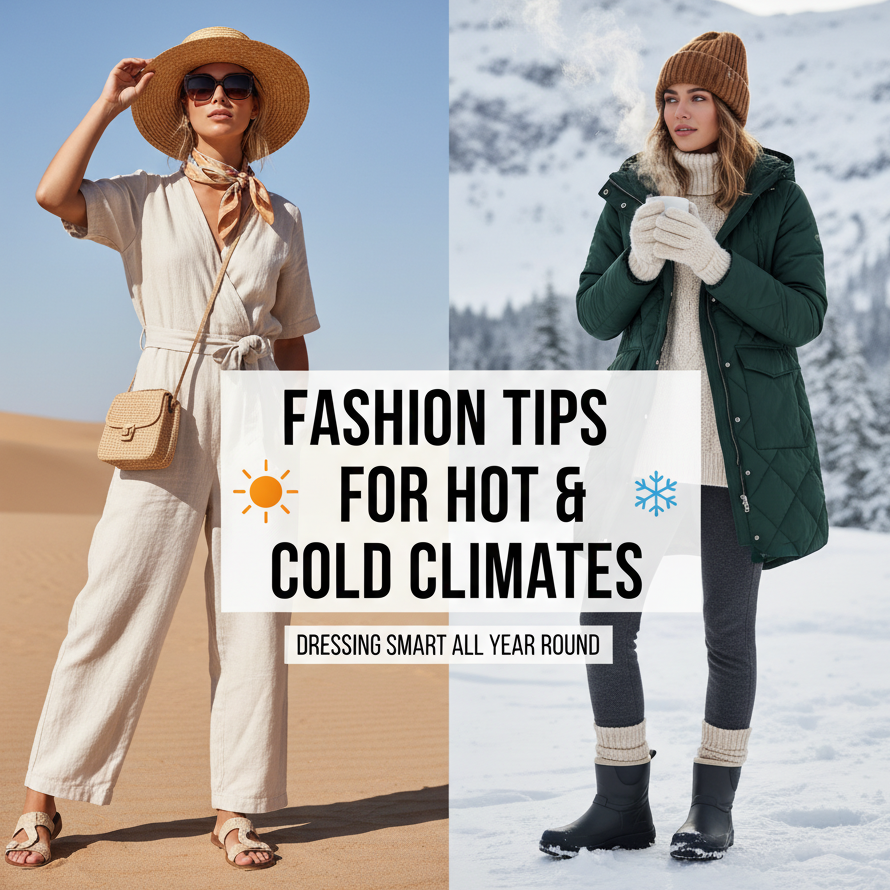
Fashion is not only a matter of being in touch with trends, but it is also about comfort, confidence, and adjusting to what you are in. Among the largest challenges that a person finds a challenge is how to dress depending on the weather conditions. Something that may suit excellently in a cold climate will be intolerable in hot seasons, and light clothes of summer will be downright useless during winter. Dressing up in hot and cold seasons assists in remaining comfortable and, at the same time, looking nice all year round.
This article aims to provide useful fashion advice for both hot and cold weather, focusing on the types of fabrics used, layering techniques for garments, suitable shoes, and accessories that cater to different weather conditions.
Understanding Climate-Based Fashion
Climate-based fashion refers to the preference for clothing that aligns with the prevailing temperature, humidity, and weather conditions. Wearing the right dress will keep the body’s temperature of the body at the right level, avoid pain, and make the whole body feel better. Smart fashion blends functionality and style, unlike when they purchase clothes due to their fashion sense.
The key factors to consider include:
- Fabric type
- Color selection
- Fit and layering
- Breathability and insulation
Now we shall consider the manner in which they vary in hot and cold climates.
Fashion Tips for Hot Climates
Hot climates are commonly linked with high temperatures, bright sunlight, and occasionally humidity. It is aimed at remaining cool, keeping your skin safe, and not overheating.
1. Choose Breathable Fabrics
The selection of fabric is the most critical in hot-weather fashion. Breathable and lightweight fabrics enable air to flow through and the evaporation of sweat.
The best fabrics to use in hot climates are:
- Cotton
- Linen
- Rayon
- Bamboo fabric
Plastic fabrics such as polyester or nylon should not be used in the presence of high temperatures, as they may trap the sweat and make it uncomfortable.
2. Wear Light Colors
Cloaked in white displays sunlight, thus keeping your body cooler. Light grey, beige, and white, pastel colors are the most suitable in sunny weather. Dark colors can absorb heat and thus make one feel warmer, more so when outdoors.
3. Opt for Loose-Fitting Clothing
Snug clothing will block the air circulation and may make one sweat more. The baggy clothes are more ventilated and less prone to heat retention. Flowy dresses, loose trousers, and oversized shirts are not only comfortable but also fashionable during hot weather.
4. Protect Yourself from the Sun
In hot climates, protection against the sun is necessary. Your skin can be covered, and at the same time, your outfit can be emphasized by fashion accessories.
Useful accessories include:
- Wide-brim hats or caps
- UV protection sunglass
- Lightweight scarves
These products aid in protecting your neck and face against direct sunlight
5. Choose Comfortable Footwear
Shoes must be airy and light. Good shoes include sandals, open-toe shoes, and canvas sneakers. Ensure that the sole is strong enough when walking around.
Fashion Tips for Cold Climates
Cold weather needs a brand that is so warm yet not restrictive or limiting to its wearer. Layering is the most important strategy in this case.
1. Master the Art of Layering
The layering will help in trapping heat and also enable you to change into your clothes depending on the indoor and outdoor temperatures.
The simplest layering system will consist of:
- Base layer: Thermal or moisture-wicking fabric
- Middle layer: Insulation Sweater or fleece
- Outer layer: Outer jackets or coats against the wind and cold
This system is very warm and does not make you feel bulky
2. Invest in Warm Fabrics
Fashion with regard to cold weather relies on insulation. Certain fabrics are characterized as good heat retention material.
The best clothes to wear during cold weather are:
- Wool
- Cashmere
- Fleece
- Down-filled materials
These clothes assist in keeping the body warm even during cold weather
3. Choose Dark and Neutral Colors
Cold climate uses darker colors like black, navy, brown, and deep green. The colors are more heat-absorbing, as well as befitting winter design. Neutral colors blend and combine with other works.
4. Don’t Forget Accessories
The fashion of accessories is crucial in cold weather. The amount of body heat that is lost through the head, hands, and feet is substantial.
The cold-weather accessories one will need are:
- Woolen hats or beanies
- Scarves
- Gloves
- Thick socks
These accessories make you feel cozy and improve your general outfit.
5. Select Proper Footwear
The cold climates are usually associated with snow, rain, or ice. Shoes must offer insulation, water resistance, and traction.
Heavy sole boots with interior lining in the best taste. Always prefer being comfortable and safe to the stylish when the conditions are extreme.
Transition Fashion: Dressing for Changing Seasons
Some areas have hot summers and cold winters. Transitional fashion comes into play in such instances.
Guidelines on transitional dressing:
- Wear light cardigans and jackets.
- Select smooth but warm clothes.
- Smartly layer, rather than wear heavy clothes.
Multipurpose items can make the budget for wardrobe less and simplify outfit planning.
Sustainable Fashion Choices for All Climates
Sustainable fashion is effective in all weather conditions. By spending money on high-quality and more durable clothes, one will save money and produce less waste.
Sustainable tips include:
- Purchasing classic fashion over fast fashion.
- Choosing natural fabrics
- Supporting ethical brands
These options are good not only for your wardrobe but also for the environment.
Final Thoughts
Hot or cold weather does not imply that you need to sacrifice a fashionable dress to stay comfortable in any weather. Knowing what to wear, how to layer, and what to wear based on the weather, you would be able to stay stylish yet comfortable throughout the entire year. Good fashion choices not only enhance your looks but also save your health and increase self-confidence.
It does not matter where you live in a tropical climate, snow, or combine all four seasons; being able to suit your wardrobe to the weather is the key to easy style.