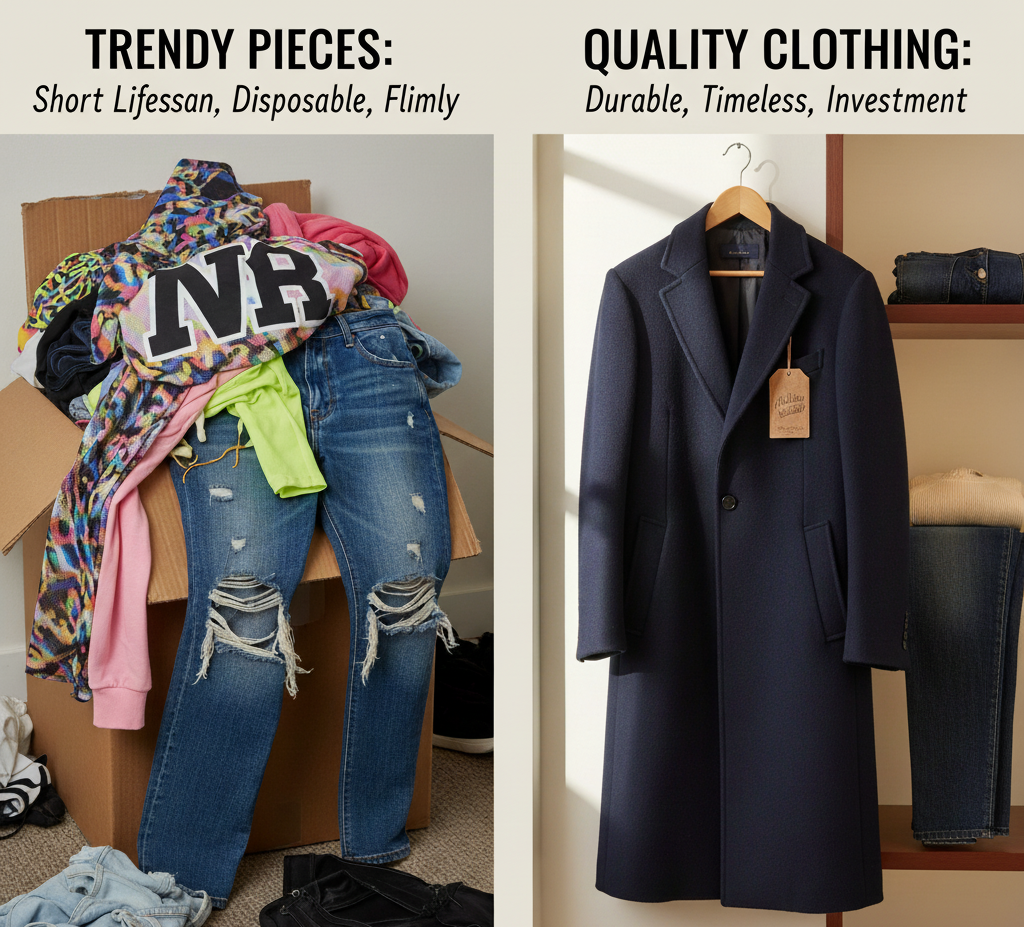
With the advent of fast fashion and the increasingly quick-moving trends in the world, the garment has become the most disposable one. The new styles are introduced each season and make consumers purchase as many as possible and change clothes fast. Nevertheless, more individuals are returning to the importance of quality clothing, or something that is created to last, and to perform at their best, and to deliver long-term value. Knowing why good clothes last longer than fads can help consumers make more intelligent and sustainable purchases.
The Difference Between Quality and Trendy Clothing
Fashionable clothes are created in a bid to grab attention easily. It tends to capture the new fashion trends, audacious styles, and trendy colors that can be out of style in a few months. Manufacturers often use lower-quality materials and less complicated constructions to maintain their prices low and their production speed high.
Quality clothes, in contrast, are concerned with durability, craftsmanship, and classic design. These clothes are designed in such a way that they can be used and washed many times and still retain their shape and look. Rather than adhering to fads, good clothes focus on utility, comfort, and durability.
Fabric Quality Plays a Major Role
Fabric is one of the largest contributors to quality clothing that makes it last longer. Durable materials used to produce high-quality garments include quality cotton, wool, linen, silk, or carefully designed blends. The purpose of choosing these fabrics is that they are strong, they have the capacity to breathe, and they also wear well with time.
Fashionable items are usually based on slim synthetic material,s which might sound impressive at first sight but wear out easily. These materials may fade or stretch out, or become pilled after some washings. Well-maintained fabrics of quality will not lose their structure and texture over the years.
Better Construction Means Greater Durability
Another important factor is the quality of construction. Quality clothes are characterized by sturdy seams, smooth-even stitching, and a well-finished seam. Buttons are firmly fixed, zippers work well, and hems are well-sewn. This information may appear insignificant, but it has a great influence on the longevity of a garment.
On the contrary, trendy products are usually produced in large quantities, and speed is the primary consideration. This may leave loose threads, loose seams, and components that are not properly attached. These defects cause tearing, broken buttons, and clothes that become unusable much earlier with time.
Timeless Design Reduces Wear and Tear
Quality clothes are also characterized by traditional designs that will not go out of style even when the fashion changes. These pieces are worn throughout the years, which makes them not lose their relevance after a short period of time.
Fashionable attire, though, can only be pertinent in the short term. The trend has a short lifespan, and when it dies, the garment is either used less frequently or thrown away, even though it may be in good condition. Through this cycle, overconsumption is promoted, and it shortens the useful life of clothing.
Cost Per Wear Is Lower Over Time
Quality clothing can be more expensive, although it can be more cost-effective in the long term. When a garment is worn regularly for several years, the cost of each wear is significantly reduced.
Fashionable apparel can appear to be lucrative at first, but constant changes will cost more in the long-term. It may be more expensive to buy new low-quality clothes than to buy a few durable quality clothes.
Proper Fit Improves Longevity
Better fitting and tailoring of clothing is normally the design. Well-fitting clothes have less tension in their seam and material. This minimizes stretching, tearing, and general wear. Fashionable items are usually made with generic sizing so that they can be manufactured faster.
Lack of fit may result in stress on some regions, which makes them wear out more and become less comfortable.
Sustainability and Environmental Impact
Sustainability is also supported by durable clothes. The longer the garments, the fewer the resources needed in order to create replacements. This minimizes wastage, energy use, and environmental effects.
Fashion has also led to the waste of textiles, as fashionable clothes are disposed of in a very brief period. Wearing good clothes is a way of continuing to be more responsible and environmentally friendly in fashion.
Care and Maintenance Are Easier
Good clothes are usually made to be worn and washed regularly. When correct care instructions are taken, all fabrics maintain their shape, seams do not tear, and colors do not able to fade so quickly.
Poor quality fashionable goods can be specially treated to prevent wastage, but will still wear out easily. This renders them not very realistic in terms of wear.
Emotional Value and Confidence
Properly made clothes can bring about the feeling of feeling confident and satisfied as well. Good clothes tend to be more comfortable, better to wear, and they will look better as time passes by. Garments make one look good.
Fashionable items can provide only temporary pleasure, yet they hardly provide the same comfort and self-esteem. As time goes by, one tends to have a higher attachment to clothing that works and tests time.
Making Smarter Clothing Choices
Being a quality follower does not imply being a style follower. It is about giving attention to the pieces that are well designed, charged with good materials, and good workmanship. Quality clothing can be styled in various ways and used throughout the years due to the use of neutral colors, traditional cuts, and generic designs.
Consumers can learn to recognize good clothes by reading labels, knowing the materials, and observing the details of the construction. By incorporating quality into a wardrobe, one can reduce the number of replacements, increase value, and have a more purposeful attitude towards fashion.
Conclusion
Quality clothes stay longer than fashionable clothes due to the high quality of fabrics and their construction, classic design, and careful workmanship. Trends are changing constantly, whereas quality clothes can always be comfortable, useful, and cost-effective. It is also cheaper in the long-term to invest in high-quality clothing and be able to sustain and encourage smarter consumerism. By going green by selecting durable items instead of the disposable ones, people can have wardrobes that really last the test of time.