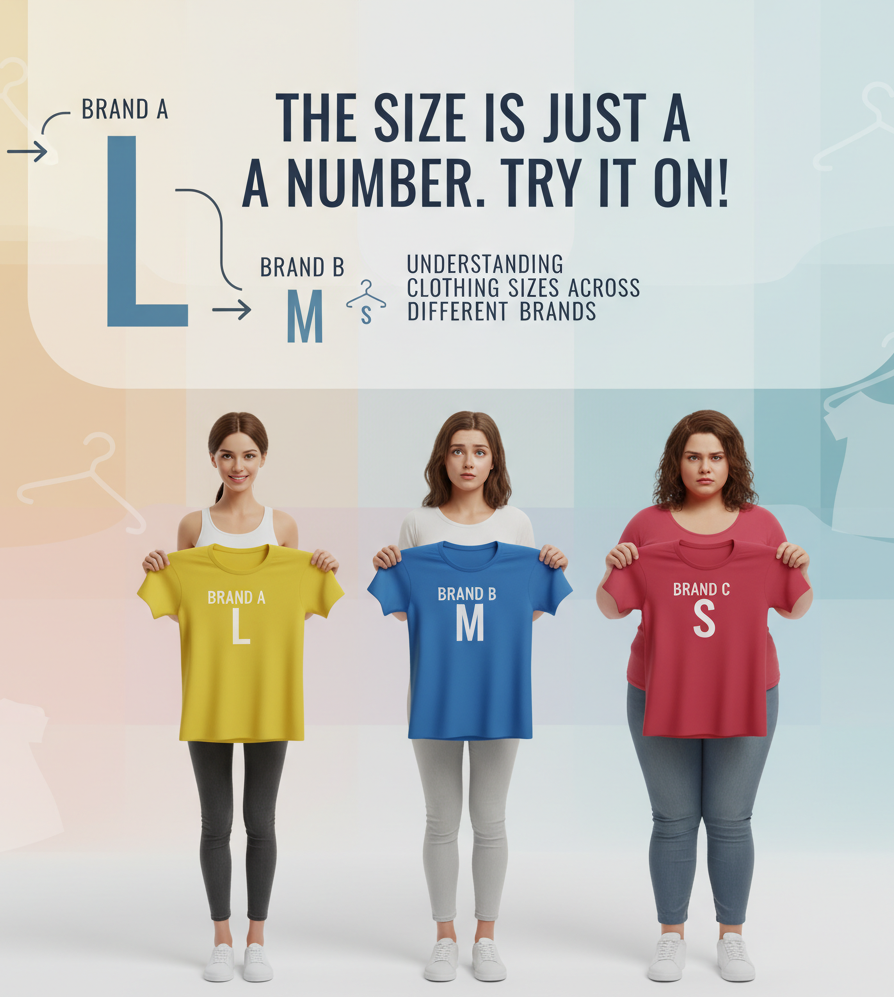
Clothes shopping is expected to be easy, but it can be so annoying to most individuals, particularly when the size of the garment fits differently with various brands. The medium of one store could be tight, and the medium of another brand could be loose. This discrepancy is puzzling to the shoppers, heightens the returns, and complicates online shopping, especially. Knowing the variations in sizes of clothes in different brands would enable consumers to make a better buying choice and save themselves the needless frustration.
Why Clothing Sizes Are Not Universal
Clothing sizes do not have a uniform standard across the fashion industry, as other measurements do e.g,. inches or centimeters. The majority of brands develop their own sizing system, which is dependent on the target audience, design philosophy, and manufacturing preferences. This would mean that a size label can be more of a guideline, instead of a measurement.
This non-standardization is caused by many factors:
- Brand Identity: Some brands seek to have a thin, fitted appearance, while others dwell on easy-going or oversized designs.
- Target Market: Brands targeting the youth can get by with smaller ratios, whereas comfort-based brands tend to have fewer constraints.
- Manufacturing Regions: The size may vary based on the part of the world where clothes are made, e.g., Asia, Europe, or North America.
- Fashion Trends: Trends like oversized or form-fitting clothes affect the way the garments are sized.
The Role of Vanity Sizing
A significant cause of variation in the sizes of clothing is a sizing system referred to as vanity sizing. This happens when the brands categorize garments as smaller than their actual labels to make them attractive to the minds of the consumer. As an illustration, a dress that can be described as a size 10 now can be called a size 8. Although vanity sizing is likely to increase customer confidence, it contributes to confusion, particularly when one has to switch brands. What may appear to be a real size in one store will be totally different in the other.
Men’s, Women’s, and Children’s Sizing Differences
The discrepancies in clothing sizes apply to all categories, although the difference is particularly evident in women’s clothes.
- Women’s Clothing: Sizes: The size differs greatly because of the variation in body shape assumptions, e.g., bust, waist, and hip ratios.
- Men’s Clothing: It is also the same in men’s size, which may be determined by their measurements, such as a waist line and an inseam, but the fit remains per brand.
- Children’s Clothing: Kids’ sizes are normally determined by age or height, although the growth rate varies, and as a result of this, the fit is not guaranteed.
Realizing these differences can enable the shoppers to have realistic expectations when buying new brands.
International Clothing Size Variations
The international shopping process is now a normal one, but international sizing introduces an extra dimension to the process. What can be considered a large size in one country can be a medium or even a small size in another.
For example:
- US sizes are larger in comparison to Asian sizes.
- The European sizes tend to have numerical systems that do not correspond directly to the US labels.
- These similar numbering differences are slight, although the size used in the UK is different from that used in the US.
That is why it is necessary to look at international size conversion lists when buying foreign brands.
Why Fit Matters More Than the Label
It is not enough to be concerned with the size label. Two garments with the same size tag can fit very differently depending on:
- Fabric type and stretch
- Cut and silhouette
- Dress length (slim, regular, or relaxed style)
A right-fit garment enhances comfort, looks, and confidence, no matter what size the garment has printed on it.
How to Choose the Right Size When Shopping Online
The fact that online shopping eliminates the opportunity to try on clothes puts size selection in an even greater perspective. The following tips are practical for being more accurate:
- Check the Size Chart: Most brands provide detailed measurements—compare them with your own.
- Read Product Descriptions: The terms such as fitted, oversized, or runs small provide useful tips.
- View Customer Reviews: Customers frequently comment on the running of goods being either large or small.
- Know Your Measures: It is a good idea to measure the size of your chest, waist, hips, and insea,m which will provide you with a good point of reference.
- Know Return Policies: Flexible Return Policies lessen risks in case sizing does not work.
How Brands Are Addressing Size Inconsistency
An increasing number of brands are being more transparent by providing more detailed sizing guides, fit calculators, and even virtual try-on options. Other companies are also increasing size ranges to be more inclusive and realistic to body diversity in real life.
There is also the influence of technology. Information-driven sizing and artificial intelligence fit advice will minimise the amount of guesswork and enhance customer satisfaction.
The Psychological Impact of Clothing Sizes
Clothing sizes can also make people feel about themselves; however, one should keep in mind that size labels do not reflect the levels of personal worth. Poor sizing is a production problem- not an individual problem.
It is better to lay the emphasis on the comfort and fit instead of the number on the tag, and encourage people to make healthy choices and feel more confident.
Final Thoughts
Knowing the sizes of clothes in various brands will enable customers to make sound judgments in the shops. Awareness is an important factor because there is no universal standard of sizing. Consumers can have a more comfortable shopping experience by understanding the difference in sizes, how and why they vary, checking measurements, and not focusing on labels as much as on fit.
Sizing confusion could eventually be minimized by increased transparency and creativity in the fashion industry, as it is now constantly changing. Informed shopping is the most appropriate so far.