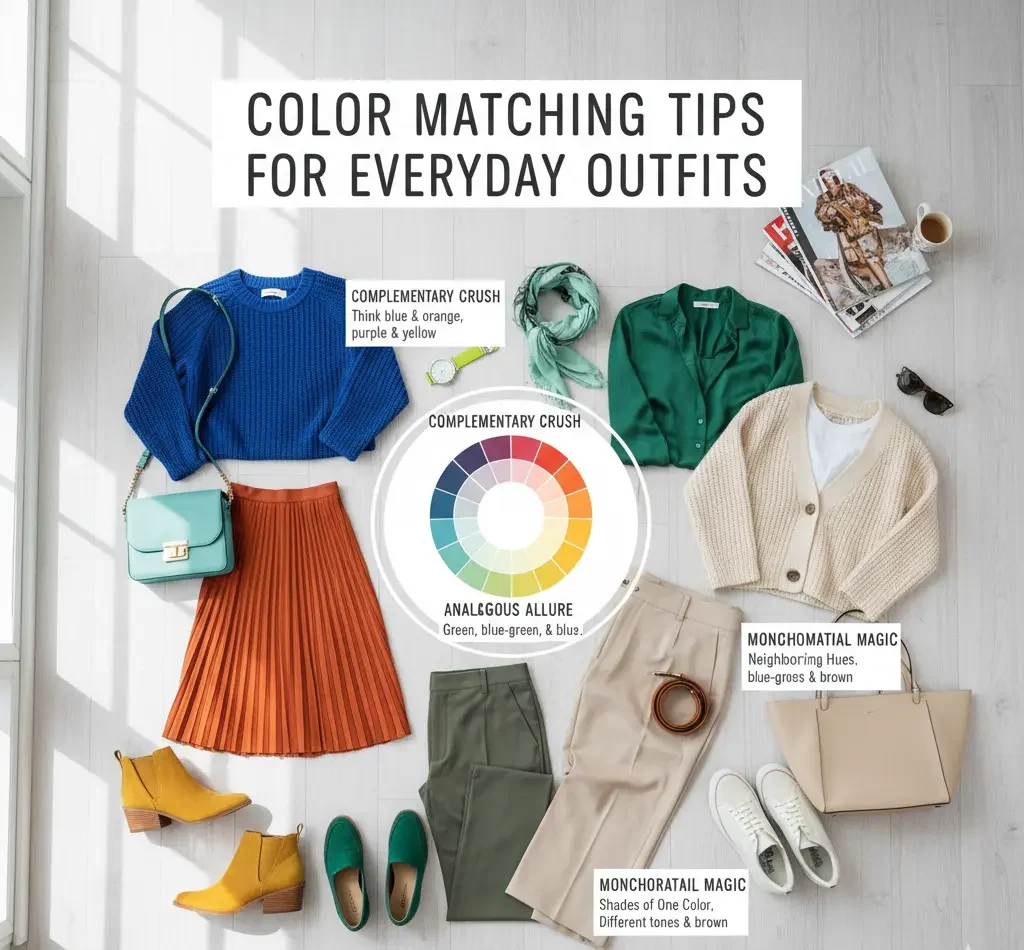
One of the most effective tools of fashion is color. It may give you a good mood, show your character, and make even the most basic clothes look trendy. However, numerous individuals do not know how to suit colors. These tips can help you achieve perfect, cool, and flattering looks in everyday outfits to master the art of color coordination.
1. Understand the Color Wheel
The initial step towards successful color matching is understanding the color wheel. The wheel is composed of primary colors (red, blue, yellow), which are the secondary colors (green, orange, purple), and also contains the tertiary colors, which are the combinations of the two. It is important to know the relationship between colors.
- Complementary Colors: These colors are located next to each other in the color wheel, such as blue and orange or red and green. They are contrasted boldly and vibrantly when paired together.
- Similar Colors: These are adjacent to one another on the wheel, e.g., blue, teal, and green. They provide a very restful and pleasant appearance.
- Triadic Colors: This means combining colors that are equally spaced on the wheel, i.e, red, yellow, and blue.
With this knowledge, you will be able to mix pieces knowing which colors are not going to clash.
2. Stick to a Base Neutral
The basics of any wardrobe are the neutrals, i.e., black, white, gray, beige, and navy. They are used as a blank canvas, and brighter or bolder colors shine.
Saying neutral top and colored bottoms ora bright jacket immediately gives your outfit the boost without burning the eyes. An unbiased base is a sure way to keep your appearance balanced and free to be creative.
3. Embrace Monochromatic Looks
The outfits that can be presented are monochromatic, i.e., different shades of the same colour, and they are extremely fashionable and simple to dress in. As an example, a light blue shirt and a pair of navy trousers will be a harmonious and elegant outfit.
To wear an outfit in monochrome, the following tips will help to make it a success:
- Combine textures to create depth, e.g., a silk blouse and denim jeans
- Change the colors slightly so as not to be too flat
- Add accessories in the form of little metallic or neutral details to avoid monotony
4. Use the 60-30-10 Rule
The 60-30-10 rule, which is originally used in interior design, is a professional styling tip that works miracles in everyday clothing. It implies the separation of your outfit into three parts of color:
- 60 percent of your dominant color (that is normally neutral).
- 30% for your secondary color (a complementary or analogous color).
- 10 per cent on an accent color (normally in accessories or shoes).
As an illustration, you could wear a beige coat (60%), a green dress (30%), and mustard shoes (10%). This makes it a well-balanced image that is professional and stylish.
5. Pay Attention to Skin Tone
Wearing your own shade of color can make your appearance more amazing. As a rule, skin colors may be divided into warm, cool, and neutral groups:
- Warm colors: Gold jewelry and natural colors such as brown, orange, and olive green appear to be flattering.
- Cool colors: Silver jewelry and blue, purple, and teal colors are the most suitable ones.
- Neutral tones: You are lucky, you can draw off both warm and cold colors.
Determining your skin tone is the best way to make sure that your color preferences are able to add to your natural beauty and not work against it.
6. Use Bold Colors Wisely
Color is the key that can be a statement, but can also be too much, so that it will stop the outfit. To incorporate bold hues:
- Combine them with neutrals to make the color shine.
- Accessories like belts, scarfs or shoes) can add a splash of color.
- Bold colors should be used in one outfit only because they might clash.
As an example, a red handbag, a white blouse, and blue jeans look spectacular but balanced.
7. Consider Patterns and Prints
Patterns make any outfit have a character; however, one must pay attention to the color to match it. Here are some tips:
- Take one of the colors that are dominant in the pattern and combine it with a solid one.
- In case of mixing, still use a close palette of colors in order to keep the outfit together.
- Larger prints are a good match with the small ones, but do not make a pair of loud prints in opposite colors- it is likely to create a disorganized look.
As an illustration, a floral dress, consisting of pink and green, can be combined with a plain green to look harmonious.
8. Layer with Confidence
Layering is not only about staying warm, but it is also an excellent way of playing around with colors. An outfit can be made interesting and dimensional by layering various color pieces.
- Start with a neutral base layer.
- Add a colored or patterned middle layer.
- Complete with a statement outer layer of a matching color.
An example is a white shirt worn under a navy sweater, followed by a camel coat, which will look casually stylish with a balance in colors.
9. Don’t Forget Accessories
Accessories are effective color cosmetics. Scarves, belts, shoes, and handbags give you a chance to add cherry colors without making a significant investment. They also assist in holding different components of your clothes together.
- Choose one or two accessory colors per outfit.
- Metallic decorations such as gold or silver may be neutral complements to virtually any color combination.
- Even more delicate details, such as a colored hairband or socks, can be added with a playful touch that is stylish at the same time.
10. Practice Makes Perfect
Lastly, you must also take into account that matching colors is something that one gets better at as they practice. There is no need to be shy and take notes on what works for you. Complementary colors, the combinations that are successful, and flattering combinations will be automatically recognized over time.
Take pictures of your outfits to look at the combinations in the future. You will begin to see patterns in the things that make you look and feel your best. Keep in mind that fashion is more a matter of self-expression rather than rules. It is your confidentiality that is your best accessory.
Conclusion
Learning to match colors to wear in daily life does not necessitate an expensive wardrobe with expert instruction. The color wheel, the combination of bold and neutral colors, the consideration of your skin-color, and the attention to the patterns and accessories will help you create the stylish and harmonious looks without any difficulty. It is all about trial and error, fun, and letting your personality be reflected in your choice of color. These tips will enhance your fashion level and make you always appear presentable, be it when you are going out to run some errands, when you are going to work, or even to meet your friends.