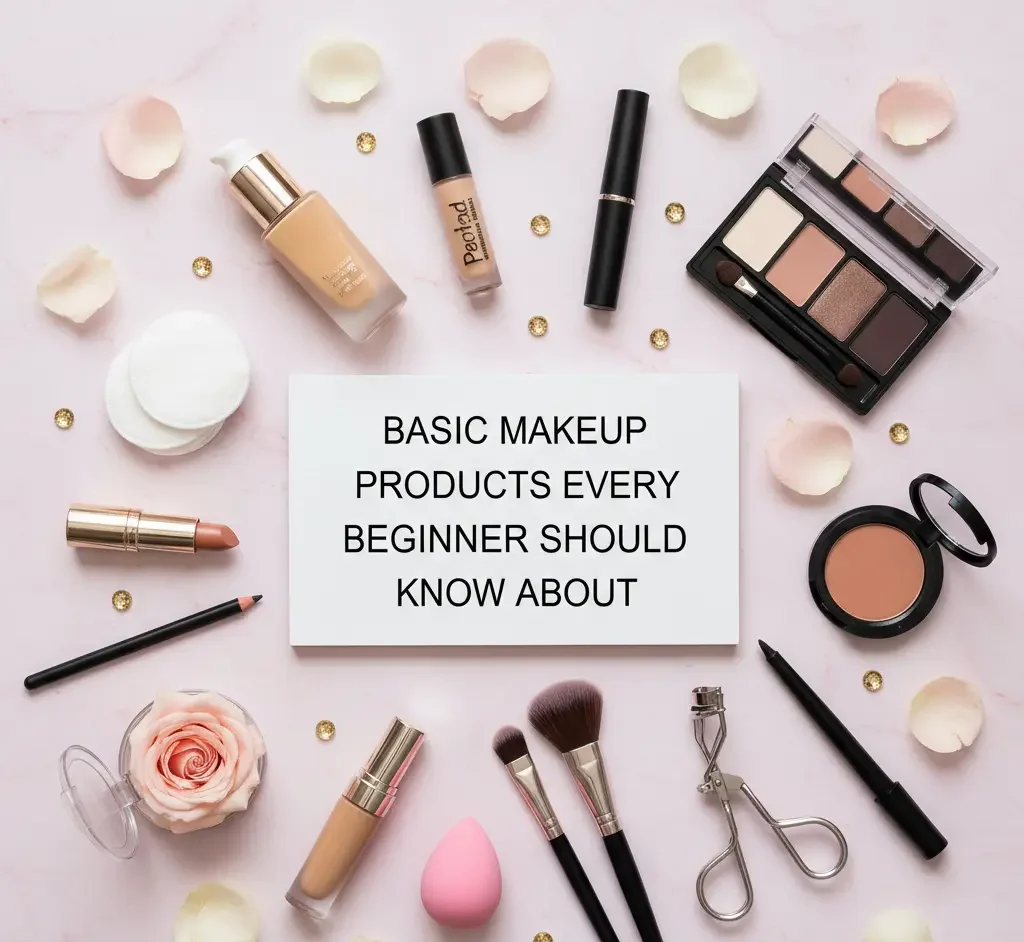
When you start with your makeup, it can be overwhelming. Beginners can get lost in a world of numerous products, brands, and tutorials; they cannot understand what they really need. The positive thing is that there is no need to make makeup complex. All it takes is a few essential products to achieve easy, fresh, and confident looks. This post outlines the fundamentals of makeup products that every newcomer should be familiar with, and it can help you create a functional and convenient makeup kit.
1. Cleanser and Moisturizer: The Foundation of Makeup
The skincare must come before applying any makeup. Clean skin also leads to better and longer-lasting makeup. A mild facial cleanser can be used to get the dirt, oil, and impurities off your skin. Apply it with a lightweight moisturizer that fits your type of skin. The moisturizer makes the skin moist and does not allow the appearance of the makeup from appearing dry or scaly. Healthy skin forms the ideal foundation for makeup, particularly for beginners who desire a natural look.
2. Primer: Preparing the Skin
Primer is a product that is used after the moisturizer and then before foundation. It prevents the texture of the skin from being uneven and also enables the makeup to last longer. Novice players have an opportunity to buy a simple primer that makes skin less shiny or makes pores less visible. Primer is not compulsory, but may be a significant factor, particularly in humid climates.
3. Foundation or BB Cream: Evening Out Skin Tone
The foundation aims at flattening the skin color and providing a smooth surface. The novices ought to find light to medium coverage foundations that are easily blushable. BB creams or tinted moisturizers are a great choice if one wants a more natural appearance. They give a light coverage whilst maintaining the skin fresh and breathable. It is necessary to select the right shade. Always apply foundation on the jawline so that it can match your natural skin color.
4. Concealer: Covering Imperfections
Dark circles, blemishes, and redness are covered up with concealer. A small amount goes a long way. A cream concealer or a liquid one is the simplest to apply to beginners. It is necessary to apply only where it is needed and mix it lightly with the help of a sponge or clean fingers. Concealer will be used to produce a refined effect, but not heavy makeup.
5. Compact Powder or Setting Powder: Locking the Base
Powder is applied to fix concealer and foundation. It minimizes shine, and makeup does not creep. Novices may apply a small powder in fast touch-ups or a loose setting powder,r which is worn longer. Sprinkling a little powder on oily ski,n such as the forehead and nose, is normally sufficient.
6. Blush: Adding Natural Color
The blush gives the face a warm and lifelike feeling. It has a natural, healthy appearance that makes you look better. Powder blushes are controllable and easy to mix,x especially for novices. Light tones such as peach, pink, or coral complement most of the skin tones. Blush lightly on the apples of the cheeks and smear upwards.
7. Eyebrow Product: Framing the Face
Brows are used to shape the face and determine the features of the face. Even slight makeup is enhanced with trimmed-down eyebrows. In cases where there are sparse parts, beginners can apply an eyebrow pencil or brow powder. Select a shade that matches your natural brow shade and run light strokes instead of creating dark lines.
A clear brow gel is able to fix the hairs in place all day.
8. Eyeshadow: Enhancing the Eyes
Eyeshadow enables you to put volume and depth into your eyes. Neutral eyeshadow colors like beige, brown or soft gold should be used by the beginner. It is more than sufficient to have a small eyeshadow palette with 3-5 shades. Neutral colors are universal and can be used daily, during school functions, or during casual activities.
9. Eyeliner: Defining the Eyes
Eyeliner serves to make the eyes stand out. Amateurs can control pencil eyeliners more than liquid eyeliners. Draw a thin line along the top of the lash line. It is possible to test the styles by trying them out after some time.
10. Mascara: Opening Up the Eyes
One of the simplest products to use in the world of makeup is mascara. It also makes lashes appear longer and fuller and immediately brightens the eyes. Select an ordinary black or brown mascara, and apply one or two layers. The excess must be avoided to avoid clumping.
11. Lip Balm and Lipstick: Completing the Look
Lips deserve care, too. Begin with a moisturizing lip balm to have soft and smooth lips. In the case of color, a novice can make a choice between lipsticks, lip glosses, or tinted lip balms in natural hues, such as nude, pink, or peach. These colours are convenient to use and match the majority of outfits.
12. Makeup Tools: Brushes and Sponges
It is easier and more effective to apply makeup with the help of the proper tools. Novices themselves require but a few necessities:
- A foundation sponge or brush
- A blush brush
- An eyeshadow blending brush
Wash your equipment on a regular basis to ensure hygiene and avoid skin problems.
Final Thoughts
In order to do makeup as a beginner, one does not need fancy and complex products. Knowing the purpose of every simple item you can make simple, fresh, and confident looks without any difficulties. Learn the way each of the products functions, blend, and select the products that are best suited to your skin type and lifestyle. With time, you will be able to increase your collection and can experiment with new styles at a pace of your own. Having these basic makeup products in your repertoire as an aspiring beginner, you are already halfway to creating a practical and beginner-friendly makeup routine that augments natural beauty.